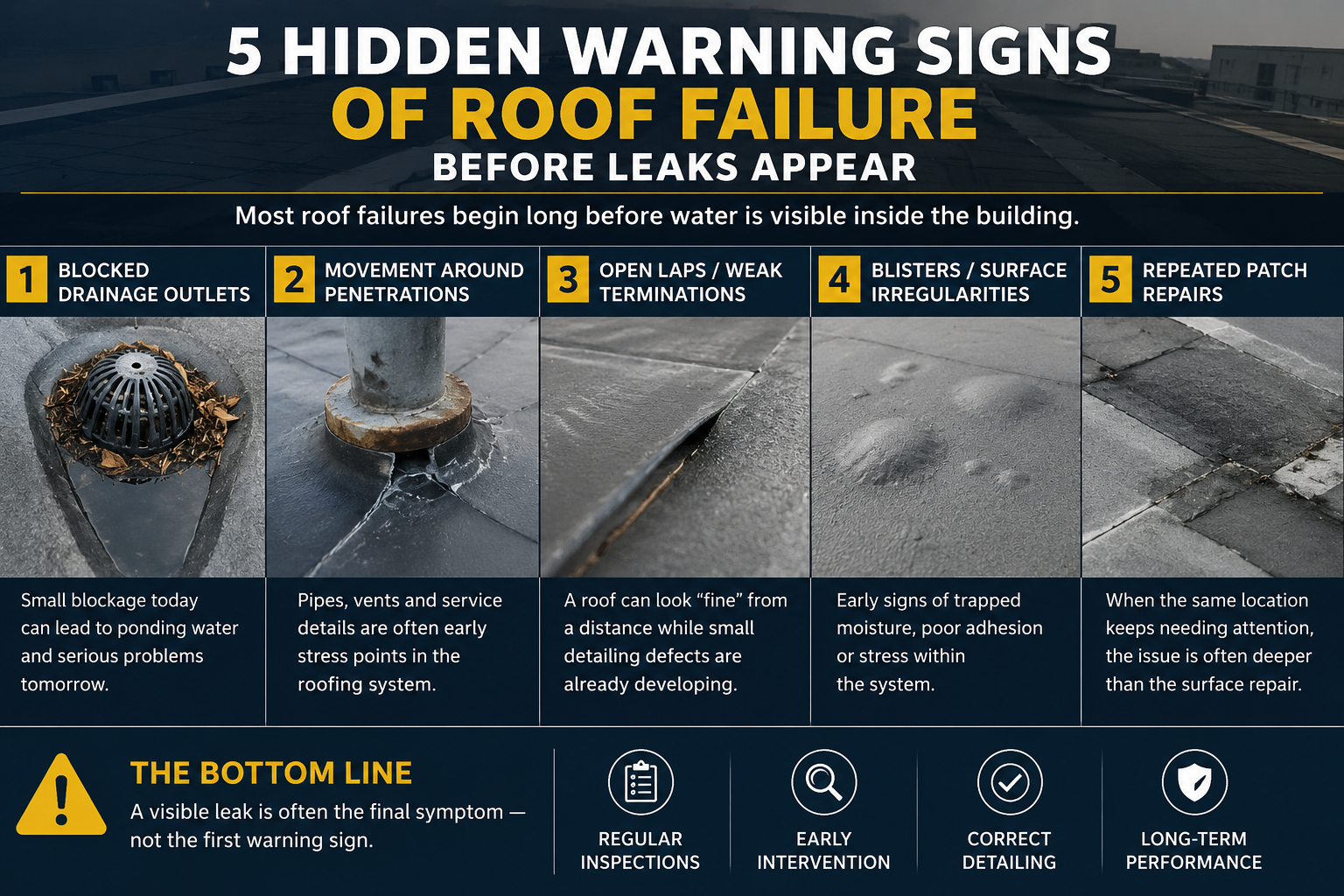
Most roof failures begin long before water is visible inside the building. Regular inspection should look for the small changes that indicate the system is beginning to lose continuity.
01Blocked drainage outlets
Small accumulations of leaves, silt or debris can restrict discharge, increase ponding and place details under continuous water pressure.
02Movement around penetrations
Pipes, vents and service details are frequent stress points. Cracking, lifting, distortion or separation around them may be an early sign that movement is exceeding what the detail can accommodate.
03Open laps and weak terminations
A roof can look acceptable from a distance while local laps, edges or termination bars are already losing adhesion or mechanical restraint.
04Blisters and surface irregularities
Blisters, bubbles and local changes in texture can indicate trapped moisture, poor adhesion, vapour pressure or stress within the build-up.
05Repeated patch repairs
When the same area needs attention again and again, the cause is usually deeper than the surface repair. Investigation should consider drainage, substrate, movement, moisture and the surrounding detail.
The practical response is simple
- inspect regularly
- intervene early
- correct the detail, not only the symptom
- document recurring defects
- plan maintenance before water reaches the building interior
Early warning signs do not always mean complete replacement is required. They mean the roof needs evidence-based assessment before the problem grows.
A visible leak is often the final symptom, not the first warning sign.